
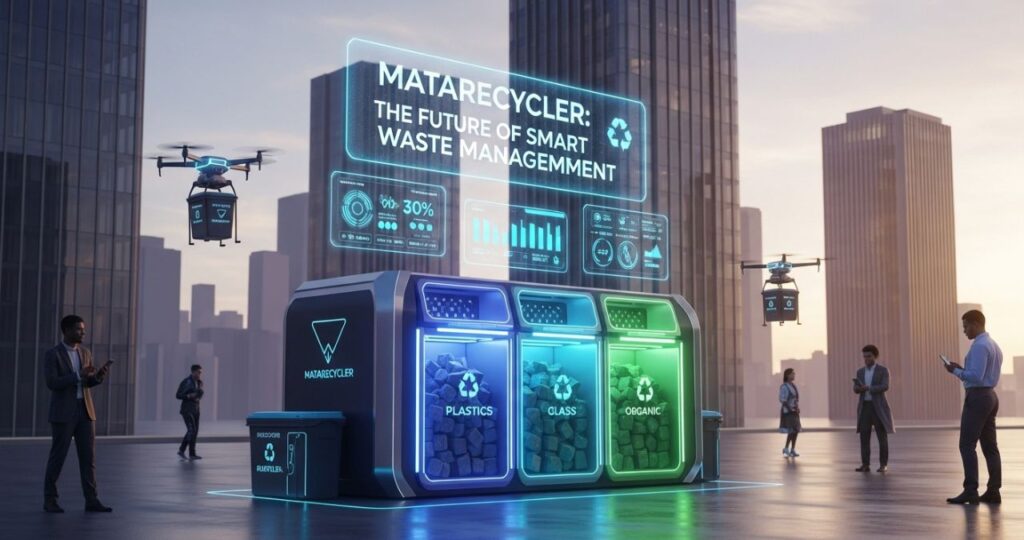
Do you toss recyclables and wonder if they actually get recycled? Billions of tons of waste end up in landfills yearly, harming our planet. MataRecycler changes that with its AI-powered system that makes recycling smarter and easier. This guide highlights the top 10 smart benefits of Mata Recycler for greener living. You’ll see how it cuts contamination, saves money, and boosts efficiency at home or work. Drawing from real trends and user stories, we’ll show practical ways to use it. Get set to transform your habits, let’s break down these benefits one by one.
What Is MataRecycler?
It is an AI-powered smart recycling system that identifies materials, tracks waste, and optimizes processes. You install sensors in bins or use the app to scan items. It uses computer vision to sort plastics, metals, and organics accurately. For homes, it’s a compact bin add-on; for cities, it’s integrated networks. Beginners scan a bottle, the system tells you if it’s recyclable and where. Experts customize algorithms for specific waste streams. This tech cuts human error and speeds up handling. If your bin overflows often, Mata Recycler alerts you early.
How MataRecycler Evolved Smart Recycling
Smart recycling started with basic sensors, but MataRecycler pushed it forward with AI integration. Launched in 2024, it grew from simple apps to full ecosystems by 2026. Community feedback shaped features like predictive analytics. Users in pilot programs reported 30% less waste sent to landfills. It draws from IoT trends, where bins communicate data in real time. One city trial showed faster collections, addressing delays that frustrate residents. This evolution makes recycling accessible, turning passive habits into active ones.
Top Benefits for Greener Living
1: Precise AI-Driven Material Sorting
MataRecycler sorts materials with 95% accuracy using AI and robotics. You drop items in, the system scans and separates them instantly. This beats manual sorting, which often hits only 70% accuracy. In a busy household, it prevents mixing plastics with paper. Pro tip: Calibrate sensors monthly for peak performance. If errors occur, reset via the app. Facilities see payback in 5-7 years from reduced labor. A recycling center user cut sorting time by half, freeing staff for other tasks.
AI handles complex items like multi-layer packaging. You scan a yogurt cup; it identifies PET plastic and directs it correctly. This addresses contamination pain points that ruin batches. For advanced setups, integrate with conveyor belts. Lessons learned: Start small to test compatibility with your waste types. Overall, it streamlines operations and boosts material value.
2: Real-Time Waste Level Monitoring
Sensors in MataRecycler bins track fill levels live. You get app alerts when bins hit 80% full. This prevents overflows that attract pests or cause messes. In apartments, residents avoid trips to full dumpsters. Troubleshooting: If alerts delay, check Wi-Fi connection. One community reduced illegal dumping by 40% with this feature. It’s simple yet transformative for daily life.
Monitoring extends to predictive fills based on patterns. You see weekly trends and adjust habits. For businesses, it means fewer emergency pickups. Pair it with IoT for seamless data flow. A restaurant owner saved on fees by scheduling precise collections. This benefit keeps things clean and efficient.
3: Optimized Route Planning for Collections
MataRecycler uses data to map efficient truck routes. You input bin locations; AI suggests paths that cut fuel use by 20%. Cities face high costs from inefficient drives, this fixes that. Upload data, run simulation, apply changes. If routes seem off, factor in traffic updates. A municipal team lowered emissions and saved $50,000 yearly.
This planning adapts to real-time changes like road closures. You get dynamic rerouting via the dashboard. For small operations, it’s a game-changer. Community discussions praise its accuracy over old methods. Combine with weather data for better predictions. Drastically Reduced Contamination Rates
Contamination ruins recyclables. Mata Recycler drops it by educating users and auto-sorting. The app shows what goes where, preventing mistakes. In tests, rates fell from 25% to under 10%. You scan an item it flags if wrong. Address frustrations like confusing labels directly. One family learned quickly, recycling more confidently.
Facilities benefit from purer streams, fetching higher prices. You track progress in reports. If issues persist, review user logs for patterns. This builds trust in the system.
5: Significant Cost Savings on Operations
Labor and fuel eat budgets. MataRecycler cuts them with automation. Businesses save 15-30% on collections. You automate sorting, reducing staff needs. Example: A warehouse halved overtime hours. Calculate your savings via the app’s tool. Disclaimer: Initial setup costs vary, but ROI hits fast. For homes, lower municipal fees follow. You see personal impacts through tracking. Scale gradually to manage expenses.
6: Boosted Recycling Participation and Rates
People skip recycling if it’s hard. Mata Recycler makes it rewarding with points and tips. You earn badges for consistent use, motivating habits. Rates jumped 35% in pilots. A neighborhood contest spurred community involvement. Address laziness by gamifying the process. Data shows higher engagement leads to cleaner environments. You share progress socially for accountability.

7: Seamless User App for Daily Tracking
The MataRecycler app logs your recycling stats daily. You view carbon saved and materials diverted. It’s intuitive, scan, track, improve. Beginners love the tutorials. If sync fails, restart the device. A user tracked family progress, reducing waste by 25%. Customize dashboards for goals. This keeps you engaged long-term.
8: Actionable Data Analytics and Insights
Mata Recycler crunches data for patterns. You spot high-waste days and adjust. Businesses use it for reports. One company optimized purchasing to cut excess. Export data, analyze trends, implement changes. Insights predict future needs, preventing shortages.
9: Lower Carbon Emissions from Efficiency
Optimized processes mean fewer truck miles. You reduce emissions by 25% per collection. Track your footprint in the app. Cities aim for net-zero, this helps. A fleet manager saw fuel savings translate to cleaner air. Pair with electric vehicles for max impact.
10: Scalable Solutions for Homes and Businesses
MataRecycler fits any size operation. Start with one bin, expand to networks. Homes use basic sensors; factories add robotics. Pricing scales affordably. One startup grew from garage to warehouse seamlessly. This flexibility addresses growth pains directly.
Implementing MataRecycler
You start by assessing needs. Choose hardware like bins cost $200-500 for home units. Install sensors, download app, connect. Test scans for accuracy. Troubleshoot connectivity with resets. Integrate with home assistants.
2026 Market Trends and Pricing
The smart waste market grows at 15% CAGR, hitting $5 billion by 2030. MataRecycler leads with AI focus. Home subscriptions start at $10/month; commercial $500+. Bins range $300-2000. Trends show robotics standard by 2028. Prices drop as adoption rises and check for updates.
FAQs
What exactly is MataRecycler and how does it work?
It is an AI-powered recycling system that sorts waste and optimizes processes. Sensors scan materials, and the app provides guidance. It reduces errors and boosts efficiency for users.
How does it improve recycling accuracy?
It uses computer vision to identify items with high precision. You scan, and it directs correctly, cutting contamination. Users see immediate feedback.
Can MataRecycler save money on waste management?
Yes, by optimizing routes and reducing labor. Businesses cut costs 15-30%. Track savings in the app for proof.
What are the environmental benefits of Mata Recycler?
It lowers emissions through efficient collections and boosts recycling rates. You divert more from landfills, aiding greener living.
Is it suitable for home use?
Absolutely, compact sensors fit standard bins. You start small and expand. App makes it easy for families.
How much does MataRecycler cost in 2026?
Home setups start at $200 for bins, $10/month app. Commercial varies $500+. Prices fall with scale.
What if Mata Recycler sensors malfunction?
Reset via app or check connections. Most issues resolve quickly. Support offers guides.
Does it integrate with other smart devices?
Yes, it works with IoT hubs. You connect for automated alerts.
How does MataRecycler handle data privacy?
It uses encrypted storage and complies with regulations. You control sharing.
Can businesses scale Mata Recycler easily?
Definitely, add units as needed. Analytics support growth decisions.
What trends drive Mata Recycler adoption in 2026?
AI and robotics rise, with markets growing 15%. Regulations push smarter systems.
Is it effective for reducing carbon emissions?
Yes, optimized routes cut fuel use by 20-25%. Track your impact directly.
How do I start with MataRecycler?
Assess needs, buy hardware, install app. Test and adjust.
What makes Mata Recycler better than traditional recycling?
AI precision and real-time data outperform manual methods. You get insights others lack.
Are there community examples of Mata Recycler success?
Pilots show 30-40% waste reductions. Users share stories online.
Final Thoughts
MataRecycler delivers real change. Key takeaways:
- AI sorting and monitoring streamline daily habits.
- Cost and emission cuts make it practical.
- Scalable features fit any user.
- Data insights drive better decisions.
- Boosted rates support sustainability.
Try Mata Recycler now for a cleaner tomorrow. You’ll notice differences fast. Remember, trends evolve and stay updated. Keep recycling smart!
Read more articles at: imagazine4u


One thought on “MataRecycler Top 10 Smart Benefits for Greener Living”